Elaphron is pioneering a new therapeutic approach through a novel class of oral, non-systemic therapies designed to address persistent limitations in current standards of care.
Lead
EL 924
Stage
Preclinical, FDA INTERACT obtained
Modality
Non-systemic
Focus
Obesity and Insulin Resistance
SCROLL ↓
What We Do
EL 924
First-in-class therapy through modulation of physiologic nutrition-driven intestinal signaling.
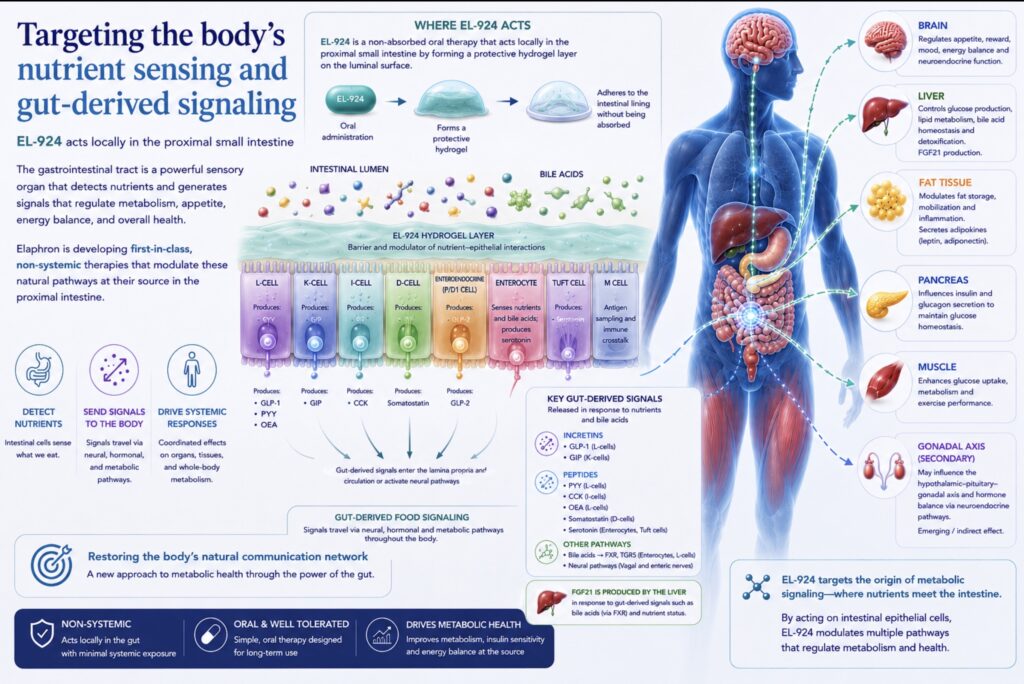
Following oral administration, Elaphron therapies form a locally acting, minimally absorbed protective hydrogel that transiently coats the gastrointestinal epithelium. Together with its associated bioactive complexes, the hydrogel creates a novel interface between the intestinal surface and its luminal environment. This interface is designed to modulate how nutrients, bile acids, and other luminal signals engage intestinal receptors, transporters, and signaling pathways—reshaping gut-derived metabolic signaling in ways conceptually related to selected effects of metabolic surgery.
The same platform can be engineered to protect the intestinal epithelium from an aggressive luminal environment and modulate local pathways involved in inflammation, mucosal injury, hypersecretion, and gastrointestinal dysfunction. This creates opportunities for novel therapeutic approaches across a range of GI-driven conditions, including inflammatory bowel disease, irritable bowel syndrome, and SIBO—addressing disease biology locally at the intestinal interface.
Lead program
EL-924
Modality
Non-systemic
Stage
Preclinical
Why It Matters
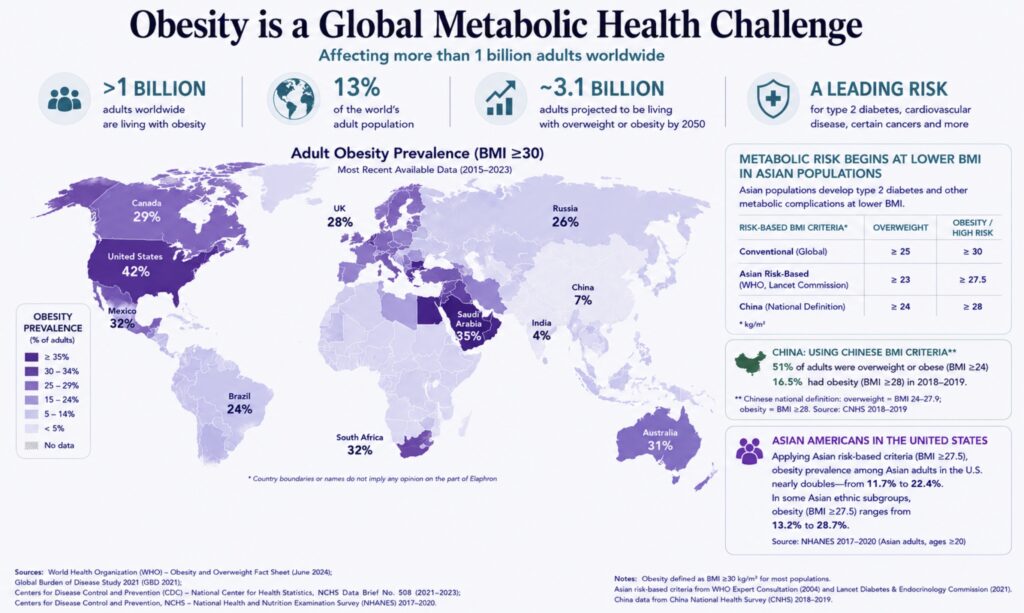
Obesity Is a Growing Global Health Challenge That Remains Inadequately Addressed
More than one billion people worldwide are living with obesity, a complex chronic disease and one of the largest unmet needs in global health.
Incretin-based therapies have transformed obesity treatment, demonstrating that substantial weight loss and meaningful cardiometabolic benefits are achievable.
However, translating this efficacy into durable population-level benefit remains challenging. Long-term persistence, treatment discontinuation and weight regain, tolerability, variable response, lean-mass preservation, cost and access, and the need for chronic therapy continue to leave important gaps in care.
The next generation of obesity therapies can build on this progress with complementary mechanisms that broaden treatment options beyond appetite suppression and weight loss alone—addressing the underlying biology of obesity and its associated metabolic dysfunction.
Vision
To establish a new therapeutic category for obesity and metabolic disease: oral, non-systemic therapies that act through the gastrointestinal tract without relying primarily on appetite suppression or chronic systemic exposure.
Mission
To translate the profound metabolic biology revealed by bariatric surgery into simple, oral, well-tolerated therapies that can be used at population scale.
Our Approach
Harnessing a key metabolic control point
The intestine is a key regulator of metabolic homeostasis. For decades, the only way to harness its profound metabolic effects was through bariatric/metabolic surgery.
The metabolic effects of bariatric surgery extend far beyond surgically induced dieting or portion control. Metabolic surgery changes how nutrients interact with the gastrointestinal tract, rapidly reshaping nutrient sensing, gut-derived hormonal and metabolic signaling, and whole-body metabolic regulation. Many of these effects emerge before substantial weight loss, demonstrating that the intestine itself is a powerful regulator of metabolic homeostasis.
Elaphron is developing oral, non-systemic locally acting therapies designed to target this biology without surgery. By modulating how luminal nutrients engage receptors, transporters, and signaling pathways in the proximal intestine, Elaphron aims to influence meal-driven gut–organ communication and reproduce selected metabolic effects associated with bariatric surgery—without an invasive procedure or chronic systemic drug exposure.
Non-systemic
Local activity, minimal systemic exposure
Mechanistically distinct
Designed to improve metabolic regulation without relying on appetite suppression
Combinable
Designed for use alone or alongside existing metabolic therapies
The Science
Targeting intestinal nutrient sensing and gut-derived signaling.
A rapidly emerging therapeutic field, supported by the profound metabolic outcomes observed following bariatric surgery and growing validation across multiple programs.
A Proprietary Platform. A New Approach.
Designed to address persistent limitations in current standards of care. Broad Therapeutic Potential.
Pipeline
Elaphron’s proprietary drug-development platform enables a new approach to diseases driven by gastrointestinal biology. By acting locally within the GI tract and modulating disease-relevant intestinal interactions and signaling, the platform is designed to address limitations of current standards of care across metabolic, inflammatory, functional, and microbiome-associated gastrointestinal disorders—from obesity and insulin resistance to IBD, IBS-D, and SIBO.
Program
Discovery
IND-enabling
Phase I
Phase II
EL-924
Obesity & metabolic disease
Program
Discovery
IND-enabling
Phase I
Phase II
EL-156
Inflammatory Bowel Disease IBD
Program
Discovery
IND-enabling
Phase I
Phase II
EL-787
Irritable Bowel Syndrome (IBS)&SIBO
Get in Touch
Interested in partnering, investing, or learning more?